My Korean American Story
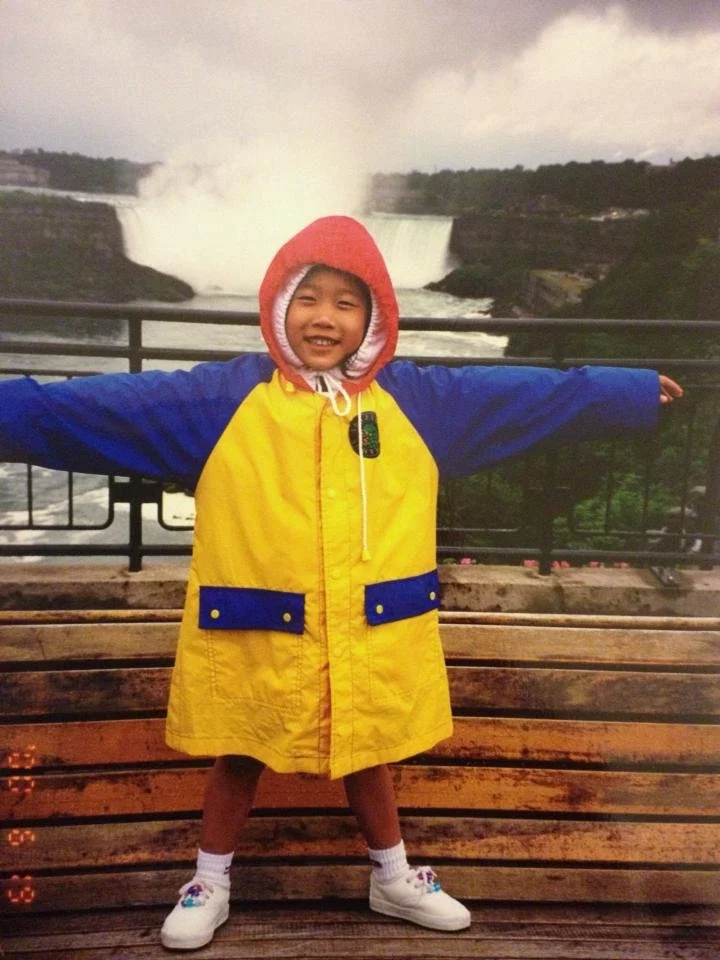
Where I Learn to Deal with Failure (or I just copy and paste choice parts of a really nice email from a former professor)
Beginning each morning by writing a to-do list, I feel immense satisfaction whenever I cross things off. It signals that I finished this, that I made something of my day. This compulsion for constant productivity, I am sure it stems from the way I was raised. Famously coined by legal scholar and writer Amy Chua, the term “tiger mom” refers to a parental figure with an incredibly authoritative child-rearing style—in other words, my parents.
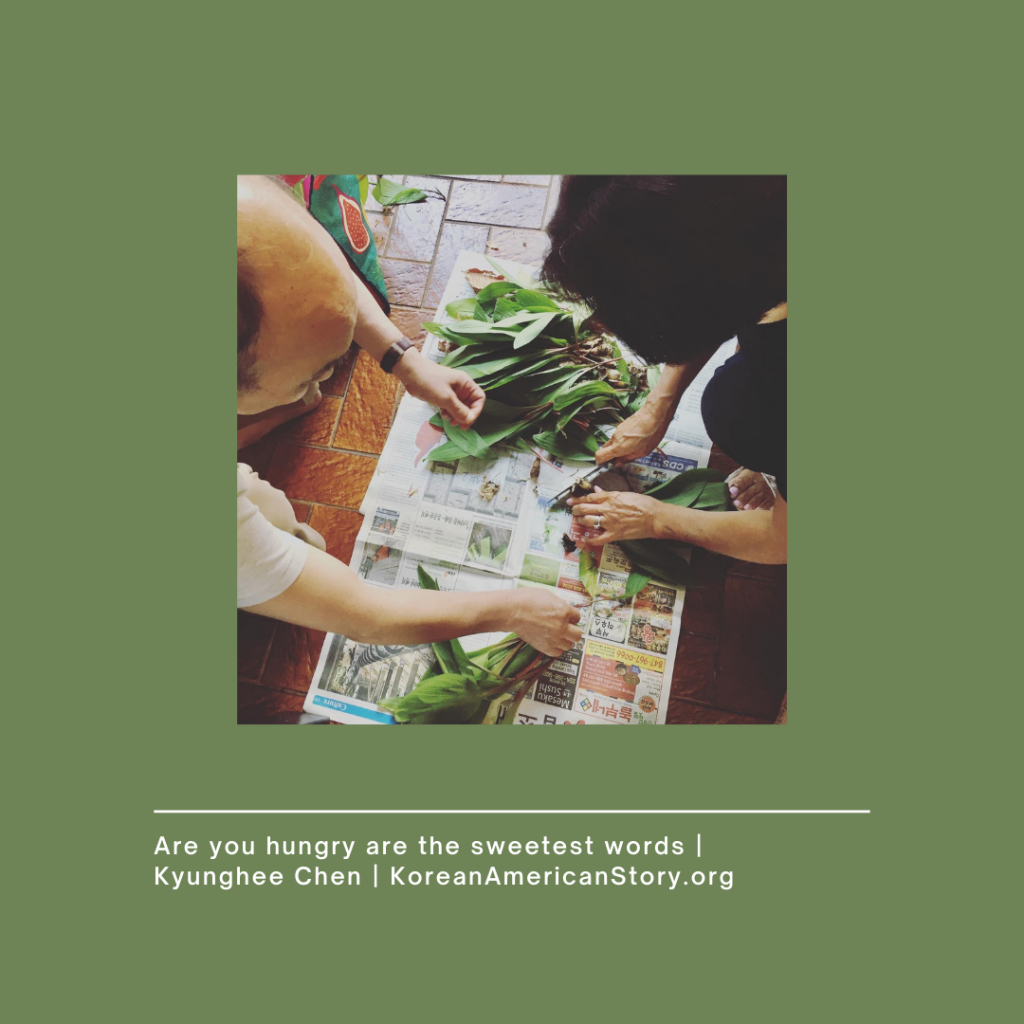
Are You Hungry are the Sweetest Words
My family and I immigrated to the US when I was 8 years old and since then, all I could remember was that our days were a blur. My sister and I attended a public school nearby, trying to fake our way into the language, the culture- everything. And as for my parents, they worked in various factories from dawn to dusk 6 days a week. Survival was the theme for most of our days together. I remember feeling lonely and as a kid, I craved the “i love you”s, “you’re doing great”, a hug, or even a pat on the back. At school when kids talked about going “Up North” on weekends or on a holiday, I sat silently forcing a smile on my face when all I wanted to do was cry.
For the longest time, I resented my parents for not taking us anywhere- for not giving me a story to share at school- for not spending time as a family.
About 6 years ago or so, my husband and I were at my parents’ house and I was looking through some old photos. What I didn’t see were family vacation photos because that didn’t exist. What I did notice were a few photos of my parents at their factory jobs and at their dry cleaning store. In these photos, I gradually saw them get older. I also noticed their eyes- eyes that screamed survival and equally, hope. I knew, at that moment, the hope was not about them. It was for their 2 young girls.
We get ready to sit down to eat dinner as my umma brings out all her homemade banchans, scoops out a warm bowl of rice for each of us as I help her get dang-jang-jigae (soybean paste soup) for us. My dad, who said nothing until now, asks “are you hungry?”. The question that gets asked too many times in our household feels like not enough for once. It feels warm, like a hug.
I never actually knew how poor we were growing up. There was no way of knowing from the way my umma feeds us. There was never a lack of delicious homemade Korean meals. The thing is, we had family dinners every single night growing up and I know even this is a rare occasion in many families now.
Everyone has their own language of saying I love you. You just have to see it with your heart, not your eyes.
Here I share with you a poem, a love letter to my parents.
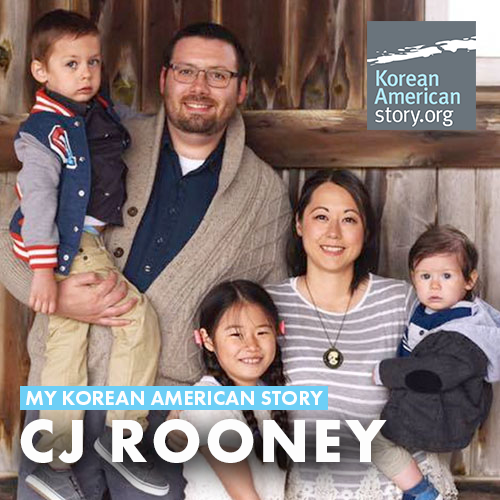
My Korean American Story: CJ Rooney
The process of creating a book, regardless of the target audience, is deeply involved and requires a plethora of patience and many hours of revisions. I cannot tell you how many different goldfish I painted before finding one that my children really engaged with, or how long it took me to compile a list of animals to include in the book, in the first place. Not to mention the seemingly impossible task of actually marketing a bilingual baby book, that isn’t in Spanish, to bookstore owners and distributors.
Same Day Service
Each time I walk by a dry cleaners in the city and see an Asian couple behind the counter, my chest tightens. And here at my parent’s store on Long Island, where I intend to spend the rest of the day, I start to feel the pressure.
My Korean American Story: SoYeong Jeong
I’m a 21 year-old college student living in the Midwest. As the number of years I’ve spent in the States started to catch up to the number of years I’ve lived in Korea, my Korean-ness began to blur. Friends brought me questions about Korean politics, and students in my Korean language class asked me about Korean history, to which I responded with hesitation and uncertainty.
My Korean American Story: Lili Kim
What’s the worst part about living with a parent who has Alzheimer’s? Their repetition of words and phrases is a simple annoyance, the frailty of their human body is understandable, and their inability to feed themself is predictable. Yet the constant desire and wish for some light to dawn on them, only to find that your hope will always be crushed, is just daunting.
My Korean American Story: Jacquelyn Chappel
Growing up, my mother did not teach my sister and me about Korea. She did not teach us Korean. She did not feed us Korean food, and by middle school, my sister and I balked at her stinky jars of kimchee.
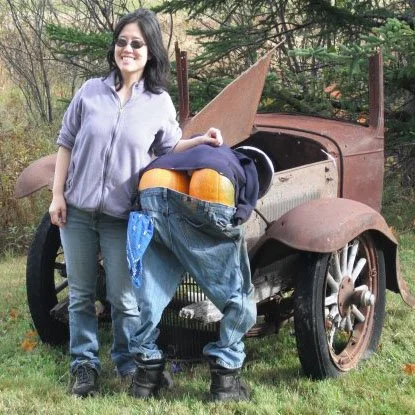
The Kimchi Effect
“What’s your middle initial?” adults would demand as they filled out my forms.
“Y,” I would mutter, staring sullenly at the counter I was too short to see over.
My Korean American Story: Mark Ro Beyersdorf
Ever since I left Southern California for college in Connecticut, my mother has always waited while I wind through the airport security line. She smiles and waves wildly until I make it past screening and turn around to wave goodbye one last time. Except once.
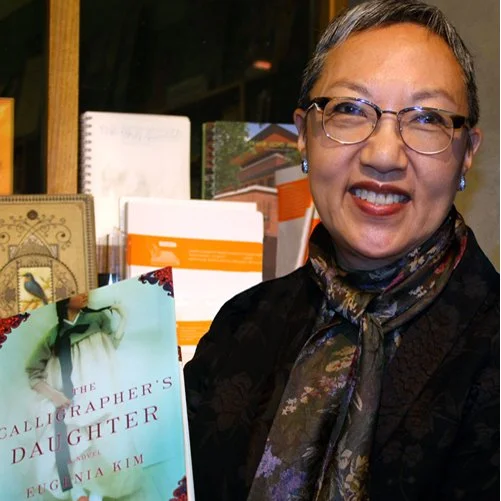
My Korean American Story: Eugenia Kim
The day after my father attended a PTA meeting at my high school, a teacher stopped me in the hall. “Your father is a remarkable man,” she said. I thought my father, who rarely went to PTA meetings, was an embarrassment. He was a Korean minister and also had an unglamorous as a translator for Voice of America’s Korean Service.
My Korean American Story: Christine Lee
I grew up in Culver City, Calif., close to the MGM Studios. I was fascinated by the studios’ larger-than-life presence in my hometown. As I noticed the lion on the logo when we drove by, I dreamed of one day being a part of that exciting world.
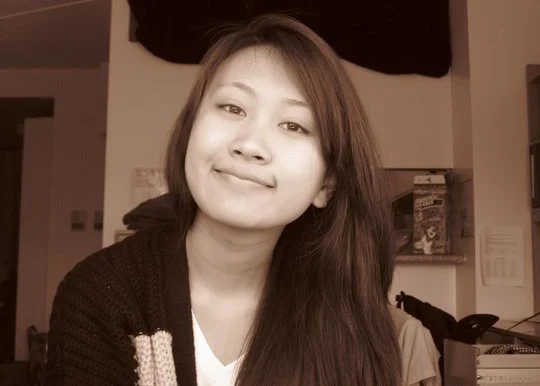
My Korean American Story: Kimberly So Jin Kim
I was never that type of Asian girl in elementary school, you know, the quiet one that has all the answers to the math problems. But I always felt like I should. Well, my father did, at least. And to my nine-year old self, that meant the same thing. And for everybody else in the classroom, I just had to fit into that mold. Otherwise, where else would I fit in? I can’t be what I’m not. That makes sense. But the Korean American thing is strange. You don’t have a choice. Until you decide that you can.
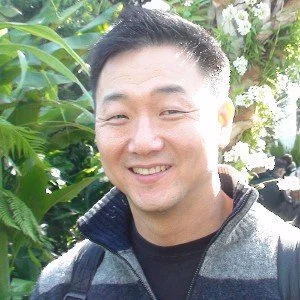
My Korean American Story: Won Kang
“The world today seems absolutely crackers. With nuclear bombs to blow us all sky high. There’s fools and idiots sitting on the trigger. It’s depressing and it’s senseless, and that’s why…I like Chinese.
My Korean American Story: Dennis Byun
Like many Korean-American families, my parents expected certain things from me as I was growing up. I had to be a good Christian; I had to be a good son and brother; and I had to study hard and attend a good college. Ultimately, my parents expected me to become a professional (i.e. doctor, lawyer, etc.). There was no room for discussion. The messages were always the same, varying only in the deliveries.