
My Korean American Story
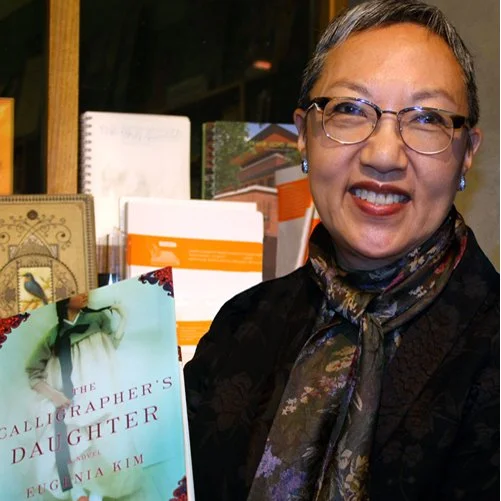
My Korean American Story: Eugenia Kim
The day after my father attended a PTA meeting at my high school, a teacher stopped me in the hall. “Your father is a remarkable man,” she said. I thought my father, who rarely went to PTA meetings, was an embarrassment. He was a Korean minister and also had an unglamorous as a translator for Voice of America’s Korean Service.
The Burden We Carry
Living in Korea hasn’t been easy. Well, as easy as I thought it would be. When my husband received his assignment to South Korea, I breathed a sigh of relief. He’d just returned from a deployment while we were stationed in Hawaii, right after an internship year as an Army Psychologist. Needless to say, I was ready for a breather and I thought I was getting it.
Burial of an Other Life
The other day my parents told me they had bought their cemetery plots in Zimmerman, Minnesota, side by side. Despite the jolt of morbidity that ran through me, I understood the practicality; my adoptive parents were sensible, well-prepared people.
Happy in Korea
“God,” said Paul, saying it like gaaaawd. “Korean guys are a bunch of homos!” I was about to tell him to pipe down, then decided it wasn’t worth the trouble. Your average Korean probably wouldn’t know what he was talking about any more than we knew what they were talking about.
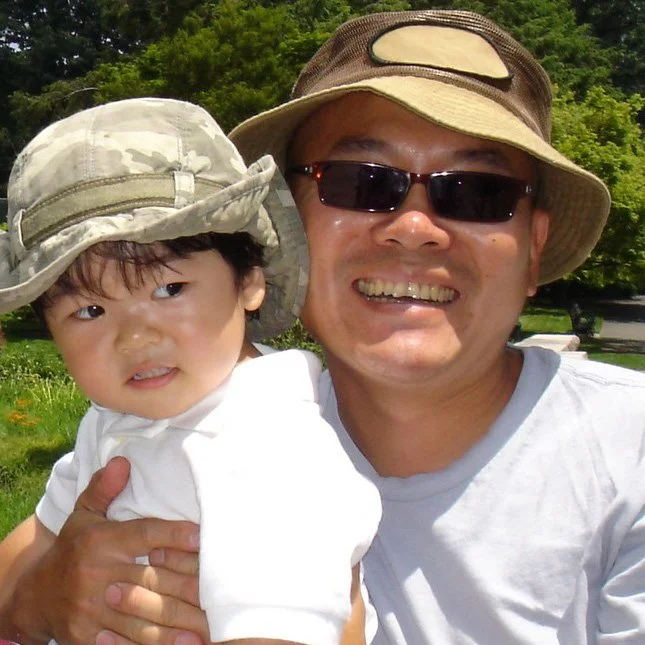
Refugee Cheap
I’m not sure what it is about being a hyphenated American, but nearly every immigrant group seems to claim two qualities for themselves that set them apart from mainstream Americans.
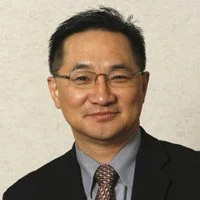
My Korean American Story: Kyung Won (Tim) Park
In Genesis of the Bible, there is a story of Abraham being tested by the Lord to offer his only son Isaac as a sacrifice on Mount Moriah. When Abraham was about to kill his son, he is stopped by the Lord and is instructed to sacrifice instead a ram caught in a thicket nearby. Abraham called the mount Jehovah Jireh, meaning that the Lord knows what is needed and will provide.
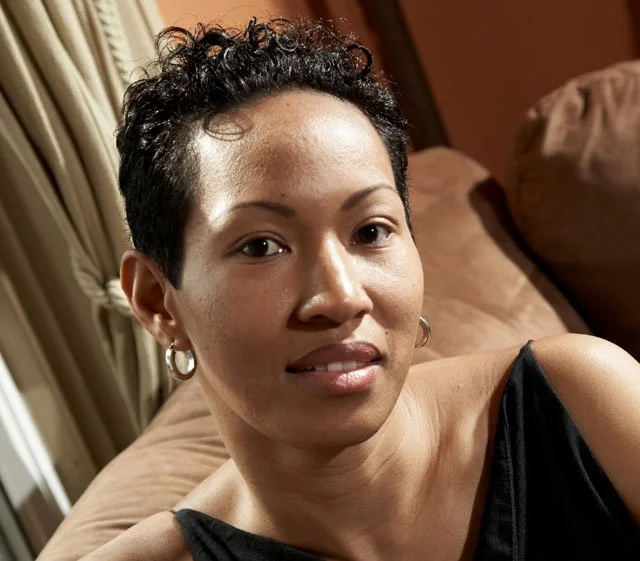
My Korean American Story: Juli Shepherd-Southwell
I was born in 1971 to a Korean mother and an African-American father. My parents met in Germany while my mom was in nursing school. My dad was stationed in Munich as a member of the United States Air Force. My family resided in Germany for four years and my mother visited Korea a few times in between. I spent my first birthday in Korea and returned twice; at the age of two and then three. At the age of four my mother and I moved to the United States, which is where we have been ever since.
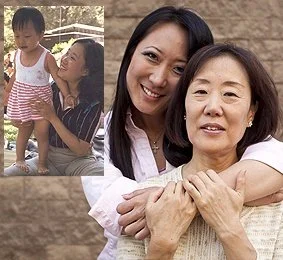
My Korean American Story: Christine Lee
I grew up in Culver City, Calif., close to the MGM Studios. I was fascinated by the studios’ larger-than-life presence in my hometown. As I noticed the lion on the logo when we drove by, I dreamed of one day being a part of that exciting world.
My Korean American Story: Kimberly So Jin Kim
I was never that type of Asian girl in elementary school, you know, the quiet one that has all the answers to the math problems. But I always felt like I should. Well, my father did, at least. And to my nine-year old self, that meant the same thing. And for everybody else in the classroom, I just had to fit into that mold. Otherwise, where else would I fit in? I can’t be what I’m not. That makes sense. But the Korean American thing is strange. You don’t have a choice. Until you decide that you can.
My Korean American Story: Won Kang
“The world today seems absolutely crackers. With nuclear bombs to blow us all sky high. There’s fools and idiots sitting on the trigger. It’s depressing and it’s senseless, and that’s why…I like Chinese.

My Korean American Story: Gina Kim
In August 2010, my autobiographical play entitled “MISS KIM” premiered in the New York International Fringe Festival. It was one of 197 plays featured in the festival and listed as the top 10 hottest shows in the Fringe. “MISS KIM” honestly narrates the events of my life. When people ask what my play is about, I usually hesitate for a second before I tell them. Once I explain that the play is about my experiences with being sexually abused, the reactions are always fascinating to me.
My Korean American Story: Dennis Byun
Like many Korean-American families, my parents expected certain things from me as I was growing up. I had to be a good Christian; I had to be a good son and brother; and I had to study hard and attend a good college. Ultimately, my parents expected me to become a professional (i.e. doctor, lawyer, etc.). There was no room for discussion. The messages were always the same, varying only in the deliveries.
My Korean American Story: Sung J. Woo
Back in 1981, when I was ten years old, my life had become a foreign-language film without subtitles. Everywhere I went, people spoke English, which was a problem because all I knew was Korean. My mother, my two sisters, and I had made the trek from Seoul, South Korea to reunite with my father in New Jersey, and once we got our bearings, it was time to get to work.
My Korean American Story: Judy Hong
Two weeks ago, I officially became a citizen of the United States of America. Took me long enough…I’ve been living in the US for the past 27 years and have been a permanent resident for 22 years. Although I toyed around with the idea of becoming a US citizen, I just never felt the need to do so. Even this time around, the decision to become a citizen began mostly out of convenience – my green card was expiring, and I didn’t want to keep having to renew it and pay the exorbitant renewal fee. I also didn’t like getting scrutinized extra carefully every time I came back from traveling abroad.
My Korean American Story: Joe Hong
Twenty years ago I went to Seoul to visit family and to see Seoul. Twenty years before that I had left Seoul as a five-year old child. As many Korean Americans probably feel, I think of Korea as my homeland. Yes, I consider myself American, but I am Korean-American.
My Korean American Story: Don Sheu
Born in Seoul of a Chinese father and a Korean mother, people have always tried to locate my identity in fractions, particularly in America. Identity is easily fractured into incomplete portions, in the US we describe people as parts instead of complete comprehensive whole identities. Perhaps this tendency was born in the US constitution, in Article 1, Section 2, where slaves were described as 3/5ths of a whole person.
Yuen-Chwan Sheu
Rizhao city is located on the coast of Shan-dong province near Qingdao, home of the famous brewery. Shandong has produced many famous figures, some mythical like Wu Song who reportedly killed a tiger with a single blow, others more real though still larger than life like Zhuge Liang, Liu Bei’s chancellor during the fall of the Han dynasty, Confucius who’s synonymous with Chinese culture and also his prized pupil Mencius.
My Korean American Story: TaeHun Kim
“What possessed you to write a book?” I am most often asked, the reference to “possessed” always accompanied by a smile. “Possessed,” though, holds most of the answer, as the daunting prospect of writing a novel eventually gave way to my growing need to exorcise my demons.